
Nicholas Leflar, former Summer Student and Articling Student, now Staff Lawyer
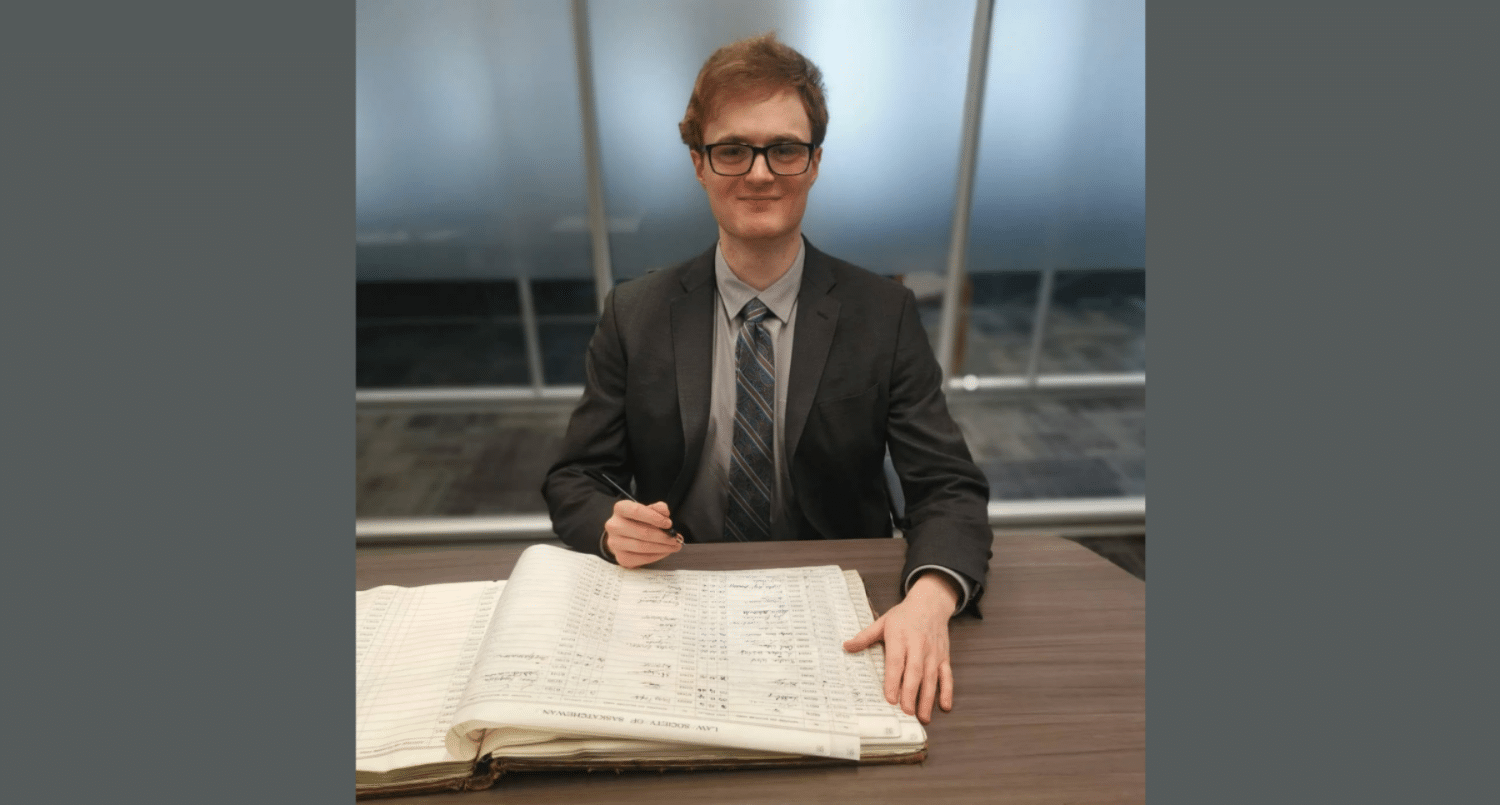
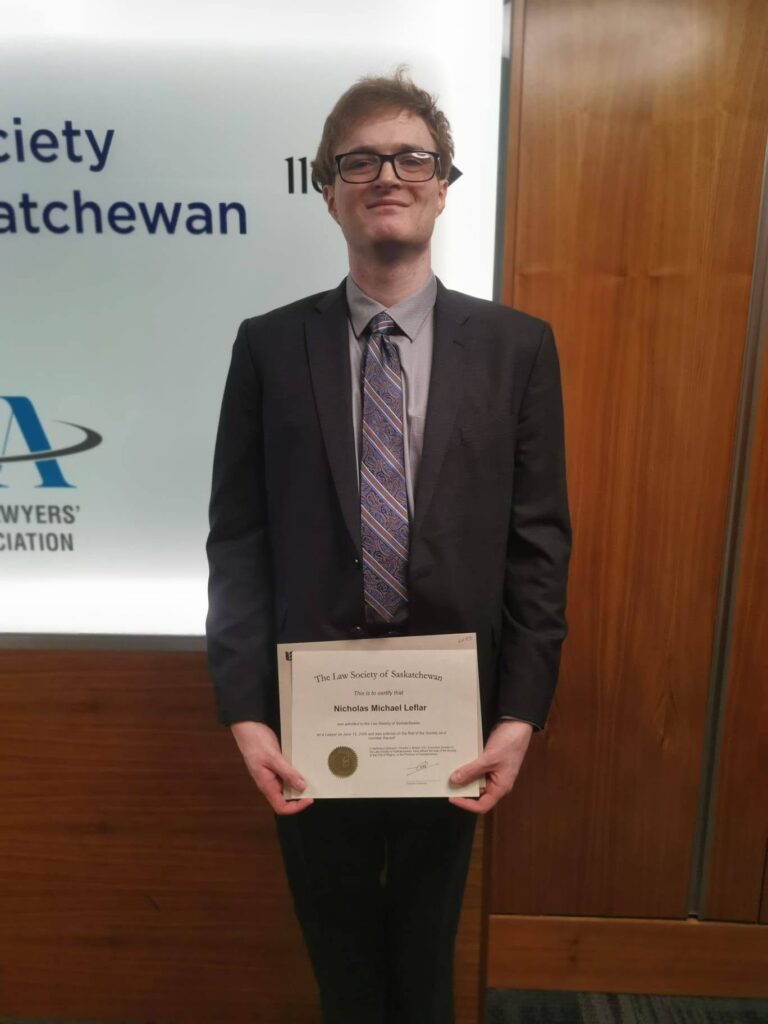
Congratulations to Nicholas Leflar, who recently signed the Law Society Roll and is now ready to serve Legal Aid Saskatchewan clients as a Staff Lawyer! Nicholas is a former summer student and articling student from the Prince Albert Area Office, and now works at the Moose Jaw Area Office.
Here, he shares a bit about his articling journey and career aspirations.
Legal Aid Saskatchewan (LAS): What attracted you to study law? What attracted you to LAS?
Nicholas Leflar (NL): Ever since elementary school, I have been interested in law. Though back then, it was largely just because I liked to argue with people. As I grew up, I started to learn about all the disadvantages people in the criminal justice system suffer, as well as the systemic problems that contribute to criminality that go unaddressed. I wanted to help address these issues, and Legal Aid was a natural fit as a result.
LAS: When you were articling, what did a typical day look like for you?
NL: I primarily handled youth custody docket. When there were new youth arrests, I would head over to the courthouse, speak with the Crown to get their position on release or sentencing, and then speak with the youth in the basement of the courthouse in order to determine what they wished to do. From there, I called the youth's proposed residence and looked for any other possible options. I would then either order a report if I could not confirm a residence or begin preparing my submissions.
If there were no new arrests and I didn’t need to prepare for any carry-over files, I would spend my day doing research for staff lawyers or handling family files. In most cases, the family files I handled were uncontested applications for divorce and child support.
LAS: What training or experience from a previous job do you have that helped you in the early days of your law career?
NL: One of my former jobs was as a summer student at Legal Aid. Naturally, this allowed me to learn the basics that I needed in order to perform my current work.
Prior to Legal Aid, I only really worked in retail. This did not allow me to develop many relevant legal skills; however, it did teach me how to speak with difficult people.
LAS: What were your expectations going into your articling year, and how different/similar was your actual experience?
NL: Given that I had been a summer student previously, I more or less knew what I would be doing during my articling term. I knew how to run bail hearings and sentencings, and I had already performed considerable research for staff lawyers previously. On some days, it was a bit overwhelming when I was handed a considerable number of new files all due in court on that same day; however, those days were a great learning experience for the kind of workload I will be managing as a staff lawyer.
LAS: What do you look forward to in your career?
NL: I look forward to actually running a trial. While I have been assigned to some trial matters, we ultimately resolved them and the trials did not proceed. It does feel as though trials represent the culmination of all the work you put into a file up to that point, and I want to experience that.
Similarly, I want to argue an appeal in the future. I have assisted staff lawyers with drafting their factums and arguments; however, I have not personally argued an appeal. With the importance of appeals in setting law for the province, I am very interested in handling my own going forward.
LAS: What are some of the biggest highlights of your experience with LAS?
NL: My biggest highlight occurred in mid-January of 2026. At this time, I had the opportunity to assist a staff lawyer with a jury trial. While I did not have the authority to actually speak in court, I was able to draft arguments and questions for cross-examination. I essentially did everything a staff lawyer would do, except actually speak in court.
Being able to witness a jury trial, see all the work that goes into them, and help present our case to a jury was exhilarating.
LAS: If you could share some insight with students pursuing a career in law, what would you tell them?
NL: Try not to take it personally. Especially at Legal Aid, you will be given a lot of files, some of which are tragic for either the accused or complainant. While it is important to remain sympathetic to what the client or complainant is going through, you should try not to let it overwhelm you. After work, or on days off, you should try and take time for yourself and de-stress.
LAS: What do you hope to see for legal aid services and access to justice in Saskatchewan over the next five to 10 years?
NL: As it stands right now, Legal Aid’s range of services is too narrow. For example, those who do not face a jail sentence or CSO do not qualify for Legal Aid. Similarly, many people cannot afford a private lawyer, but still earn enough to not qualify for Legal Aid. This forces those people to navigate an increasingly complex justice system by themselves, putting them at a distinct disadvantage. This needs to change. The Legal Aid Act should be amended to allow a greater number of people to qualify. At the same time, the province should allocate more funding so Area Offices can hire more lawyers to keep up with the increased workload.