
Helping Parents Find Their Voice in Child Protection Proceedings

October 27 is National Duty Counsel Day
In child protection proceedings, where decisions can have a profound and lasting impact on families, even a single appearance with duty counsel can make a meaningful difference.
For Samantha Neill, Legal Aid Saskatchewan’s Director of Family Law and Mediation Services, FSM duty counsel is about more than explaining legal procedures. It’s about helping parents and caregivers understand their options and participate meaningfully in decisions that affect their families.
Making a Complex Process More Accessible

Without legal representation, parents may struggle to understand their rights, navigate interactions with Ministry workers or appreciate the implications of agreements they are asked to sign.
“Legal representation in child protection proceedings is particularly important because of what’s at stake,” Neill explains. “The state can and does become involved in the lives of private citizens in ways that have a profound impact on the present and future circumstances of children, parents and extended family.”
Duty counsel provides limited legal assistance rather than ongoing representation throughout a case. Services may include summary legal advice, help understanding Ministry documents and court procedures, assistance with applications for full-service Legal Aid representation, and connections with Ministry workers and First Nations representatives. Duty counsel helps parents and caregivers understand their proceedings and identify their next steps.
A Voice in the Courtroom
For many parents, entering a courtroom can be intimidating. They may arrive unsure of what the Ministry is requesting, why an order is being sought or how to communicate their concerns to the court.
Neill says duty counsel can help ease that uncertainty by reviewing documents, explaining what to expect in court and helping parents prepare to communicate their concerns.
Since January 2026, FSM chambers proceedings for matters on the list where parents are present without counsel are no longer open to non-parties, including counsel appearing on other matters. During these in-camera portions of FSM chambers, duty counsel can help parents understand their immediate legal options and also facilitate same-day applications for full-service Legal Aid representation. This gives parents an opportunity to explain their position, whether they are seeking the return of their children, proposing a trusted alternative caregiver or requesting another order that reflects their circumstances.
Duty counsel’s presence can also, at times, assist the Court’s processes by advising whether Legal Aid counsel is likely to be assigned, and the anticipated timeline for such. In this way, duty counsel t may also help prevent avoidable adjournments and delays.
Support Beyond Legal Advice
Neill’s approach also recognizes that the ability to participate in court proceedings can be drastically impacted by unmet practical needs. Housing insecurity, food insecurity and limited access to medical care, mental health supports and addiction services are among the difficult circumstances impacting many Saskatchewan families dealing with child protection matters
She believes that sometimes, support looks different; sometimes it means meeting an immediate need. After a few weeks of her team providing FSM duty counsel services in Saskatoon, Neill started keeping snacks available for clients who are hungry. After meeting with applicants living with diabetes and experiencing housing and/or food instability, Neill sourced honey-based energy packets for lawyers to offer parents experiencing the physical effects of low blood sugar at the Courthouse. “It’s about ensuring parents and caregivers who connect with or observe the activities of FSM duty counsel know there are lawyers available to help and who see them as deserving of respect and support,” she says.
She believes people can more effectively engage with the justice system when time is taken to ensure they better understand the circumstances they are facing. For example, when parents arrive at court unsure where to go or what the Ministry is seeking, where possible duty counsel lawyers work with Ministry counsel to ensure there is an opportunity for parents and caregivers to review applications and draft orders before their matters are heard. These conversations enable parents to ask questions, discuss their circumstances and gain a better understanding of the assistance available to them.
Building Connections, One Conversation at a Time
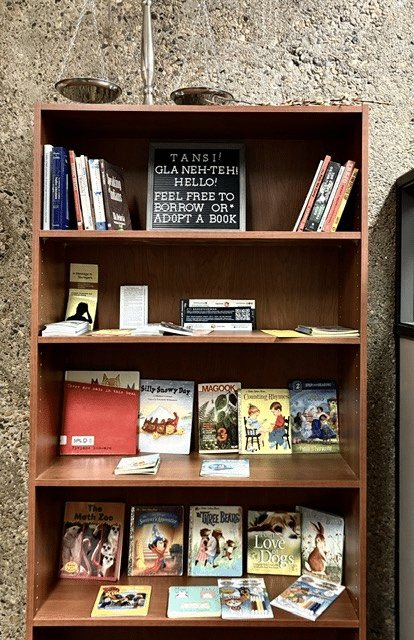
Neill’s commitment to building relationships extends beyond the courtroom. In 2023, she established a free library at her office where clients could borrow or adopt books. As more clients began bringing their children to appointments, the initiative expanded to include children's books, colouring sheets and toys, with some of the lawyers in the office also contributing items over time. These small gestures help create a welcoming space for clients and their children, and an opportunity to connect over something other than their legal matters
On National Duty Counsel Day, Neill’s work illustrates how access to justice begins with helping people understand their options, ask questions and participate meaningfully in decisions affecting their families. Sometimes, that support begins with a legal explanation; sometimes, it begins with a simple conversation that helps a parent feel less alone in the courtroom.
